

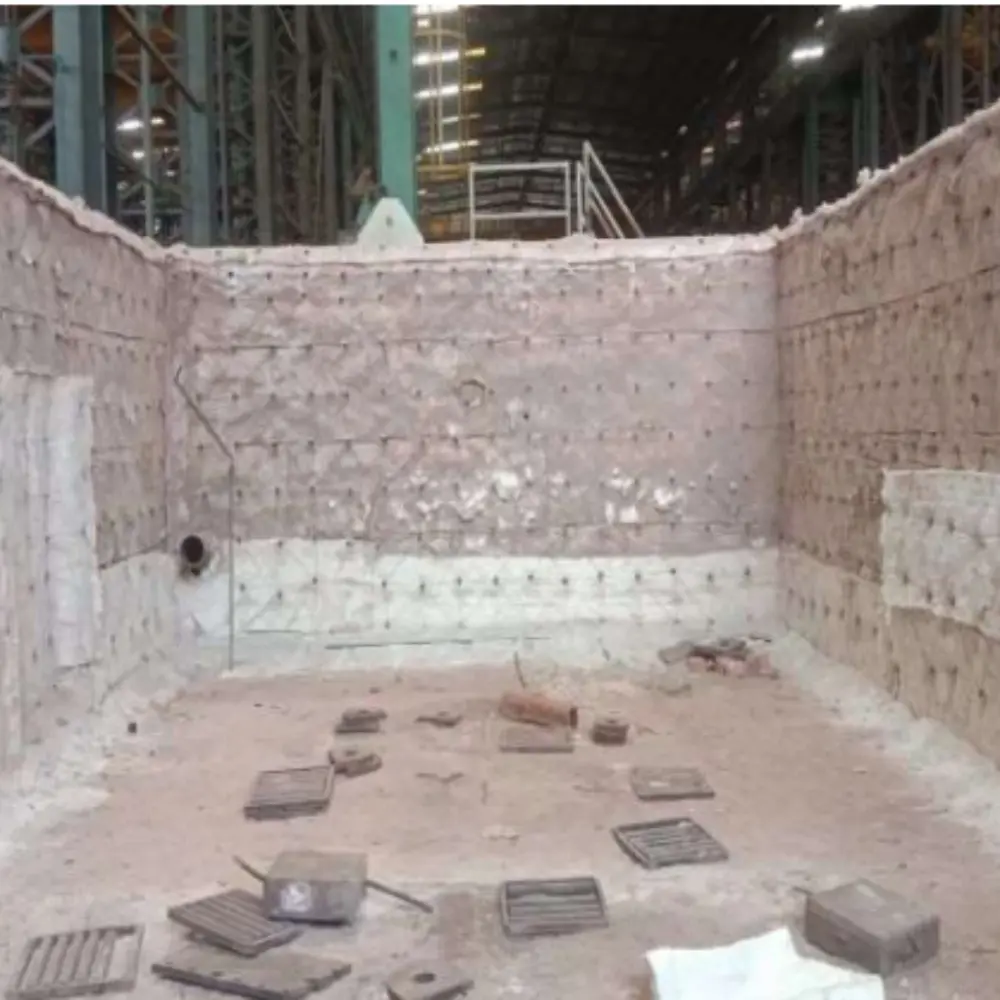
SC HRTI 1200 Water Base is a two-part system, supplied as a powder and binder that are mixed at the time of application. The binder is diluted with water in a 1:6 ratio, and the resulting solution is then combined thoroughly with the supplied powder. This mixture forms a homogenous, easy-to-apply coating that adheres strongly to furnace bricks and refractory materials.
Once cured, the coating forms a durable textured matte finish with excellent infrared reflectivity and thermal insulation, reducing heat radiation loss and improving energy efficiency. It is non-toxic, solvent-free, and designed to meet modern environmental and performance standards.
SC HRTI 1200 Water Base is ideal for high-temperature insulation and protection in a variety of industrial applications, including:
It is specifically designed for non-metallic furnace interiors. For metal surfaces, SC HRTI 1200 Solvent Base is recommended.
Surface Preparation:
Clean the furnace or oven interior thoroughly with sandpaper to remove loose dust, carbon deposits, and contaminants. Ensure the surface is dry and free from oil or grease.
Mixing Process:
Mix 100 ml of binder with 600 ml of water (1:6 ratio).
Stir thoroughly to achieve a uniform solution.
Add 1 kg of SC HRTI 1200 powder to the binder-water mixture and mix to form a homogeneous paste.
Prepare only the quantity needed for each coat to avoid premature curing.
Application:
Apply the first coat evenly with a brush over the cleaned surface.
Allow to air dry for 4 hours.
Apply a second coat and, if required, a third coat to achieve coverage between 25–30 sq. ft/kg ensuring ~200 microns DFT.
Curing Process:
After all coats are applied, allow 4 hours of air drying.
During the first furnace operation, raise the temperature gradually at 50°C per hour until reaching operational heat.
This controlled heating allows the coating to cure completely and bond effectively to the surface.
SC HRTI 1200 Water Base has been successfully implemented in major industrial furnace projects, including:
These successful applications demonstrate the coating’s long-term performance under real-world industrial operating conditions.